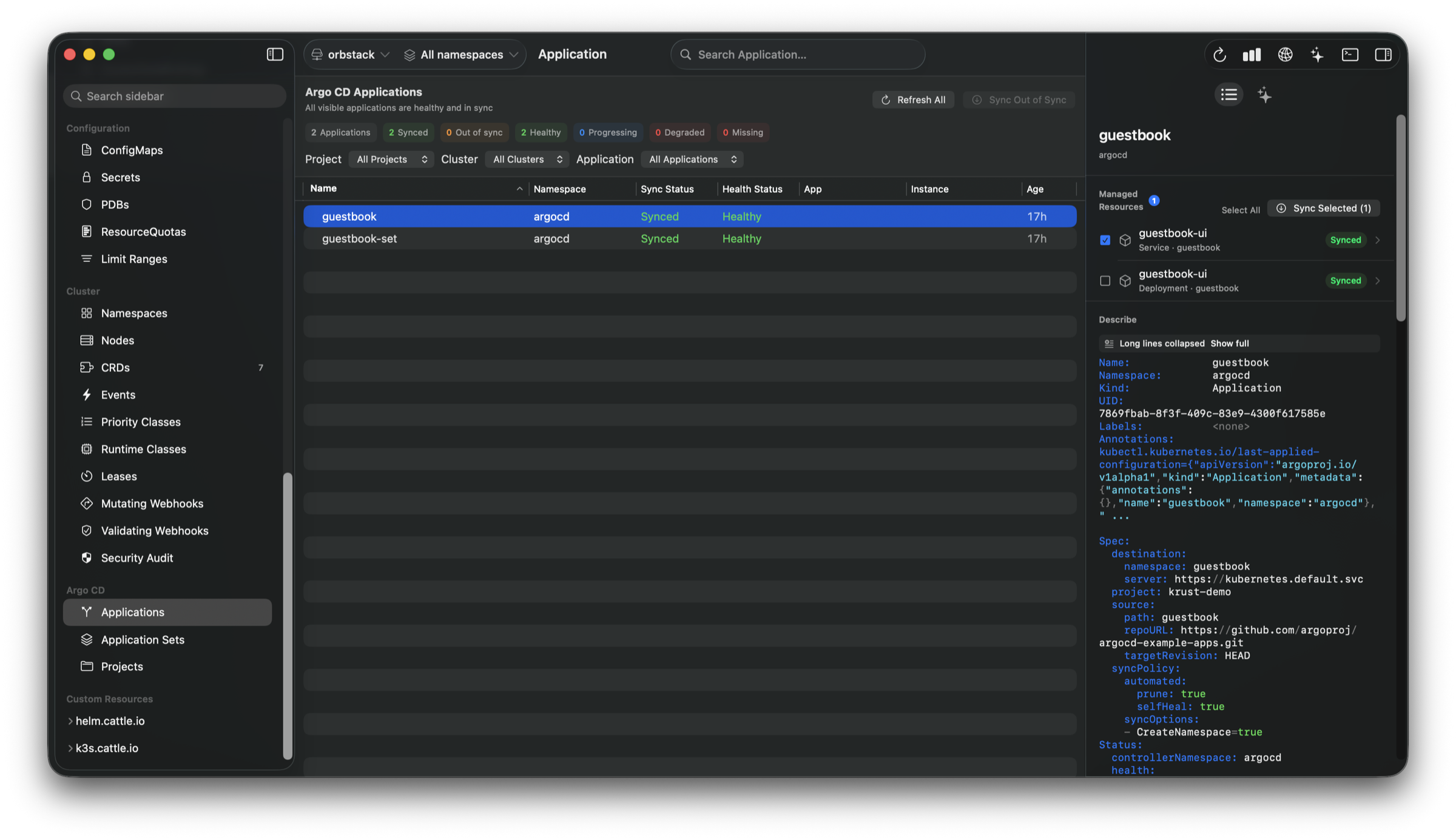
Lens 2026.8 is a meaningful release. It does two things Kubernetes operators have been asking for: it improves responsiveness on large clusters and brings Argo CD into the main cluster navigator.
It also makes the line between Lens Personal and Lens Plus easier to see.
The core Lens Personal experience is still free for eligible users. The new Argo CD workflow is not. Lens lists it as a Premium Feature available through Plus, Pro, Enterprise, or an active 14-day trial on a Personal subscription.
That distinction matters if you are choosing a Kubernetes desktop tool for daily work instead of evaluating a short demo.
What Lens 2026.8 Actually Adds
According to the official Lens 2026.8 release note, the update includes:
- an “up to 20×” improvement for interactions on large clusters
- faster tab switching with thousands of pods
- less background work from logging, validation, and object binding
- automatic detection of Argo CD in the cluster navigator
- Application, ApplicationSet, and Project views
- Sync and Refresh actions from the Lens UI
- AI summaries for Argo CD resources through supported coding agents
The performance number needs the qualifier Lens uses: up to 20×. Lens describes one large-cluster interaction falling from more than seven seconds of background processing to roughly a quarter of a second. That is a vendor-reported result for a particular path, not evidence that every Lens operation is now 20× faster.
Still, the direction is important. Large-cluster latency is a product problem, not a cosmetic problem, and Lens is investing in it.
What Is Free and What Is Premium
The Lens pricing page currently lists Personal as free for students, hobbyists, and engineers at small organizations. It includes the core cluster workflow: resources, metrics, logs, Helm, port forwarding, and editing.
Lens Plus is listed at $25 per user per month, billed annually. The Plus feature list includes AI, MCP, GitOps with Flux or Argo CD, cloud integrations, Security Center, Hotbar, and commercial support.
| Capability | Lens Personal after trial | Lens Plus / active trial |
|---|---|---|
| Core resource browsing | Yes | Yes |
| Logs, Helm, port forwarding | Yes | Yes |
| Argo CD integration | No | Yes |
| Flux integration | No | Yes |
| Ask AI | No | Yes |
| Built-in MCP server | No | Yes |
| Security Center | No | Yes |
There is another eligibility condition worth reading before standardizing a company on Personal: Lens says organizations with more than $10 million in annual revenue or funding need a paid subscription, except for a limited evaluation period.
The practical summary is not “Lens is paid now.” That would be inaccurate. Lens Personal still has a real free core. The accurate statement is: Lens is putting its newest AI, MCP, GitOps, and security workflows in the paid product, with temporary trial access for Personal users.
Why Argo CD in the Navigator Matters
Argo CD already has its own UI. The value of adding it to a general Kubernetes desktop app is context switching.
An Argo CD status can tell you that an Application is OutOfSync or Degraded. The next questions usually live deeper in the cluster:
- Which Deployment failed to roll out?
- Which ReplicaSet owns the failing Pod?
- What do the Events say?
- Did the new container start and crash?
- Is the Service still selecting the intended Pods?
- Is the live object different because of drift or because reconciliation is still running?
Putting GitOps state next to Kubernetes resources shortens that path. Lens 2026.8 is moving in the right direction here.
Where Krust Is Positioned Differently
Krust is not trying to reproduce the whole Lens ecosystem. It is a native macOS operations app with a narrower product boundary: direct Kubernetes access, low-latency resource views, logs, events, YAML, topology, terminal workflows, and an evidence-driven agent.
Krust’s Argo CD workspace exposes sync state, health, project, destination cluster, and operation state. It supports Project, Cluster, and Application filters; shows the resources managed by each Application; and can selectively sync one or more chosen resources. Refresh, Hard Refresh, full Sync, Sync with Prune, and terminating a running operation remain available as Application actions. These Argo CD workflows are part of Krust Free rather than a time-limited premium trial.
That does not make Krust universally better:
- Choose Lens if you need Windows/Linux parity, its extension ecosystem, cloud-account discovery, or enterprise product surface.
- Choose Krust if you operate from a Mac, want a native local-first workflow, and do not want Argo CD, MCP, AI diagnostics, or security auditing to disappear when a premium trial ends.
The more useful comparison is not feature-count versus feature-count. It is which product boundary matches your daily operating environment.
The Decision
Lens 2026.8 is a strong release, especially for teams already standardized on Lens Plus. The Argo CD integration is operationally useful, and the large-cluster work addresses a real weakness.
For an individual Mac operator, however, the update also creates a clean evaluation question:
Do you want core Lens for free and pay for the new GitOps/AI layer, or use a native macOS tool where those workflows stay in the free operating surface?
Try the workflow, not just the dashboard. Open a degraded Application, trace it to the live workload, inspect Events and logs, and see how many context switches it takes to reach the cause.
See the detailed Krust vs Lens comparison or download Krust Free.