Why Krust Needs VPN Access
Krust uses Apple Network Extension to make Kubernetes service DNS work locally in a stable, predictable way. The current implementation is a scoped Network Extension transparent proxy: it handles DNS only for cluster-local domains (svc.cluster.local, cluster.local and short <service>.<namespace>.svc names), relays those lookups to Krust's local DNS listener, and intercepts TCP only to Krust's private virtual-IP range (198.19.0.0/16 by default) used for forwarded services.
Short version: this permission is for local Kubernetes service DNS workflows such as *.svc.cluster.local. It is not used to route normal internet traffic through Krust.
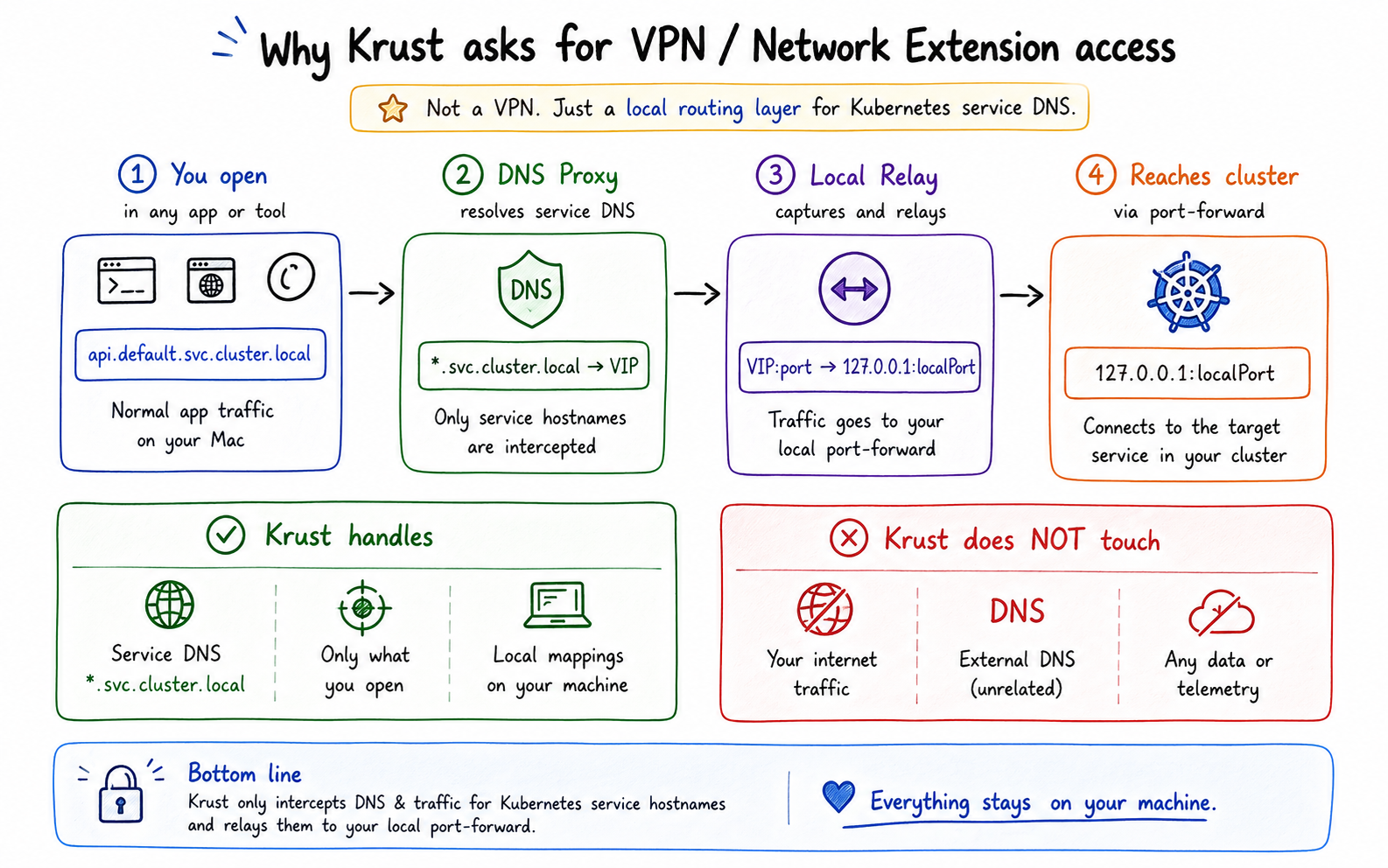
What this enables
- Use real service hostnames like
*.svc.cluster.localfrom your Mac - Avoid constant localhost port confusion across tools and sessions
- Open the same service from browser, curl, Postman, and scripts
- Keep separate mappings for the same hostname on different service ports
What Krust does not do
- Does not route your general internet traffic
- Does not inspect unrelated external traffic
- Does not send DNS mappings or forwarded traffic to Krust servers
Scope
Krust only handles internal cluster DNS domains (for example, *.svc.cluster.local) and TCP connections to its private virtual-IP range, both used by DNS proxy and local service forwarding workflows. It does not rely on the older manual resolver-install flow, and it does not forward public DNS through Krust; non-cluster domains stay on the normal macOS resolver path.
Privacy
Mappings and forwarded traffic stay on your machine and are never attached to optional crash diagnostics. See Privacy Policy for full details.